Am I Equipped Right?

Like many other dedicated photographers, I’ve somehow accumulated a sizable stash of photo equipment over the years. I’ve also gained a lot of experience knowing what equipment I’ll need for a particular type of shooting.

My last two assignments were a combination of travel and outdoor shoots. My aging back and wobbly knees beg me to travel as lightly as possible for two reasons: a) to minimize the size and weight of the load that I carry and b) to reduce the amount of time I need to get ready for any given shot.

Since I don’t like carrying camera bags or backpacks, I rarely carry extra lenses. On hikes, it’s a chore for me to search for the right lens and change it on the fly, especially if wildlife is the subject matter. It’s far faster for me to slide the desired camera/lens setup on its shoulder strap up to my eye and be ready to shoot in a few seconds.

After these two recent assignments, I’ve zeroed in on a reasonable set of cameras and lenses to use when traveling long and far. I based my choice on the range of the lenses that I typically use: a very wide angle, a medium range telephoto zoom and a long range telephoto zoom.

For several years, I’ve come to rely on Sony’s NEX series of mirrorless cameras. Not only are they compact and lightweight, but they have several features that I appreciate such as the electronic viewfinder which instantly previews your exposure adjustments and a mode that captures in-camera panoramas. One drawback of these mirrorless cameras is that there isn’t a long telephoto lens available. For this I have to stick with a full-frame Nikon DSLR.


Here’s the short list that I’ve found works well for me:

For very wideangle, I use a Sony NEX7 with a manual focus Rokinon 8mm fisheye.

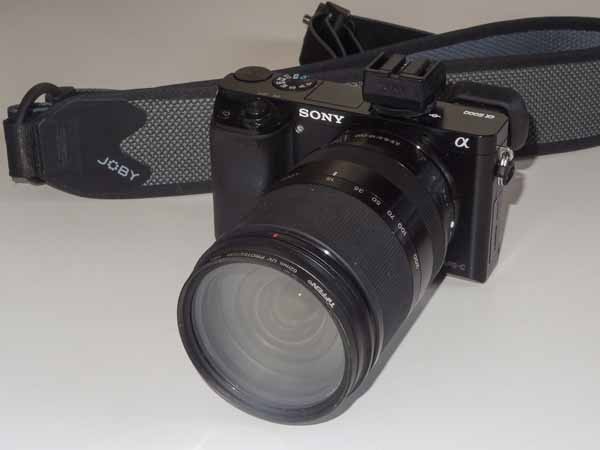
For the medium telephoto, I use a Sony A6000 with a Sony 18-200mm lens.

For the long telelphoto, I use a Nikon D600 with a Nikon 80-400mm lens.

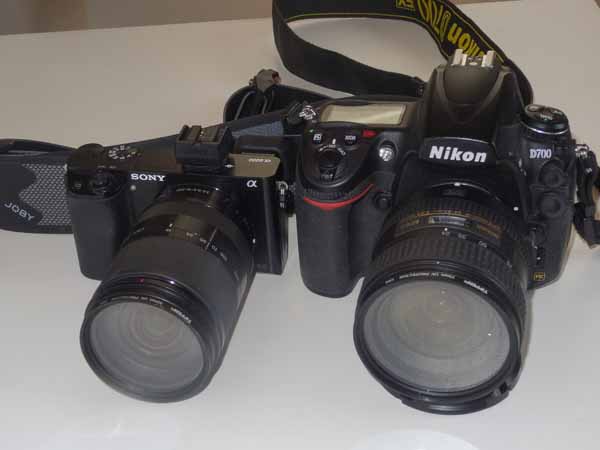
As you can see, the Nikon DLSR setup is monstrous next to other two cameras. But lugging this heavyweight around is the price I have to pay for the lens’ long reach.


The NEX7 is a very a very capable camera. I like its large 24mp APC-C sensor, excellent electronic viewfinder and brightly lit tilting LCD.

The 8mm Rokinon lens is about 1/4th as large as my expensive fisheye lens for Canon DLSRs. Using the Rokinon lens I have to manually focus and set the exposure so it’s less convenient than the Canon setup. But the savings in bulk is a major plus for me.

Below are a few photos using this setup. The extra wide angle lets me record everything in front of me. I especially like how the fisheye exaggeratingly bends the horizon.


The A6000, Sony’s successor to the NEX7 is also mirrorless. Feature wise it is very similar to the NEX7 except that it has a superior autofocusing mechanism. This enables high speed captures at frames rates up to 11fps.

When not traveling, the A6000/18-200mm setup is my everyday camera. With a large zoom range I have a wide angle to medium telephoto in a single lens.

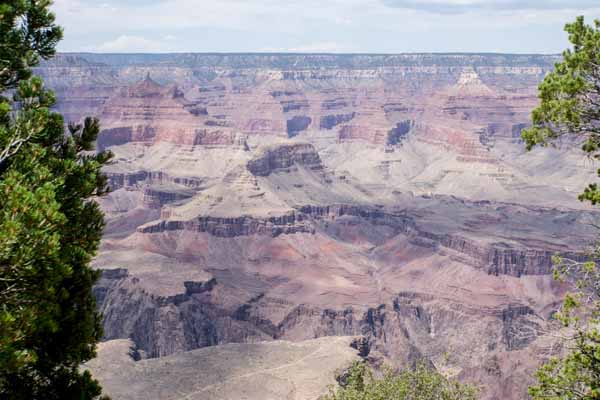
When traveling, it becomes my primary camera with the other two cameras reserved for special points of view. Below are a few examples that illustrate the versatility of the 18-200mm lenss.


The Nikon D600 is a full-frame DLSR with a 24mp sensor. It weighs in at two pounds which is twice as much as the A6000.

The Nikon 80-400mm zoom lens weighs just under three pounds making this setup a combined five pounds. Although this is hefty to carry, the lens lock (prevents the zoom from unintentionally sliding) keeps it secure while carrying it with a shoulder strap.

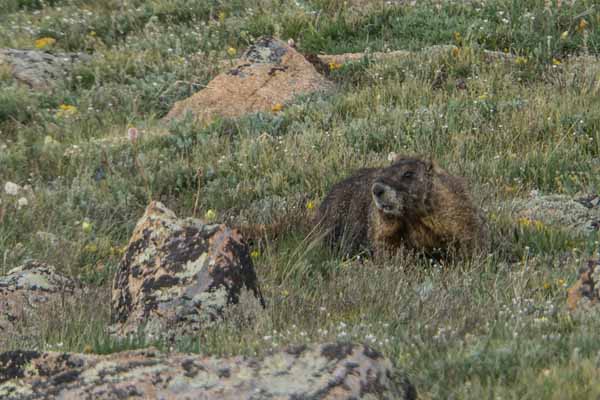
This long telephoto comes off of my shoulder mostly for the long distance shots such as these below.


So there you have it, my equipment of choice for outdoor photography. Of course, not everyone has the same preferences or requirements in the field as myself so this set up may not work universally. But for me being properly equipped has proved to be an ideal way for me to work comfortably, quickly and efficiently.
 
 
Written by: Arnie Lee


Posted in accessories, equipment, personal, scenic, stills, tips, travel, wildlife | Tagged , , , , , , | Comments Off on Am I Equipped Right?

What a View

Wide Angle to the Extreme

It’s eye-catching when I see a photo that “bends” the horizon.

This bend comes from the camera’s lens. Use a very wide angle lens and you’ll see the curved “barrel” distortion on the images. One well-known type of wide angle lenses is the fisheye. These lenses typically have a field of view approaching 180 degrees – allowing you to capture the entire scene in front of the camera.

Until recently, fisheye lenses were expensive. I have one that cost well over $1500. But when I was looking for an ultra-wide angle for my Sony equipment, I found an inexpensive lens made by Rokinon. With its $300 price tag, I was a little skeptical of the quality of images from such a low cost lens but decided to try it regardless.

Here’s a short gallery of some of the scenes that I captured during my first outing with the lens a few weeks ago.


This is an 8mm f/2.8 fisheye. I wanted an ultra-wide angle for an extra Sony Nex7 mirrorless camera.

The Nex7 is very compact and lightweight. The Rokinon 8mm fisheye is also surprisingly compact.


The Sony Nex7/Rokinon 8mm setup is only about 1/3 the size of my Canon 6D with a Canon 8-15mm fisheye – a true space and weight saver.

One of the first images that I recorded with the new lens was in the Tetons. I especially like the curved horizon.


Here in Yellowstone you can see that the bridge rail curves upwards. The lens does not support the camera’s autofocus feature.

However an 8mm lens has a very wide depth of field which makes focusing less critical as you can see in this image taken at Mono Lake.


At Grand Canyon, the bend in the horizon is amazingly scenic. The lens does not support autoexposure so I set the camera shooting mode to manual, set the lens aperture to f/8 and adjusted to the proper shutter speed.


In both of these photos, you can see that the exposure for both a shaded and sunny scene were correct. Neither the manual focus nor the manual exposure requirements of this lens is a concern.


At Monument Valley I took advantage of the lens’ extreme wide view. Here I was able to take in a 180-degree view to photograph this huge monument within a single image.


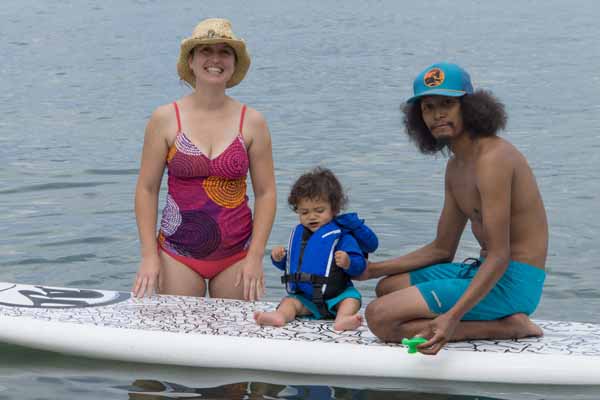
The fisheye excels for those of you who like shooting portraits that include the vast surroundings.


At Mesa Verde, we encountered another “tight squeeze”. However, we were able to capture this with the lens’ wide view.


In Rocky Mountain National Park, the lens took in not only the winter’s left over snow but the billowing overhead July clouds.

What about the sharpness?

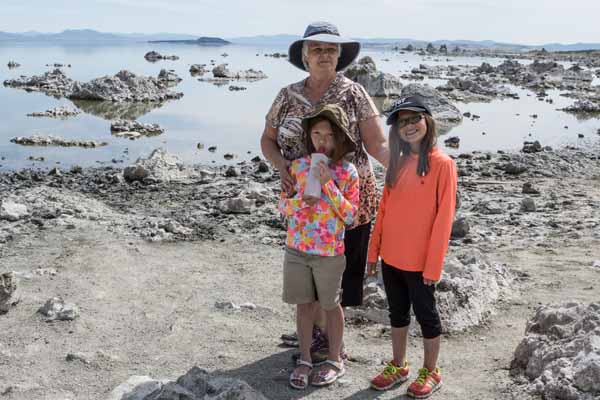
Here I’ve enlarged a small section of one of the above images. You can clearly see the detail in the face, the lettering of the cap and the tufa formations in the background.

I found the sharpness of this inexpensive lens to be very acceptable.


After my short time with this lens, I am no longer skeptical of it’s quality. The images are tack sharp with very good color reproduction. If you’re on the lookout for an ultra-wide, include this lens in your search.

The Rokinon 8mm f/2.8 fisheye is also available for other camera models as well: Fuji, Samsung and Canon M mount. Other similar versions with a maximum f/3.5 aperture are available for Canon, Nikon, Sony A mount, Pentax and Olympus 4/3.
 
 
Written by: Arnie Lee


Posted in composition, equipment, scenic, stills, travel | Tagged , , , , , , , , , , , , , , , , , | Comments Off on What a View

The Sony A6000 Mirrorless

My 6300-Mile Field Test

On our recent vacation, my camera of choice was Sony’s newest mirrorless camera. While I also brought a much larger Nikon D700 conventional DSLR, I relied mostly on the the Sony A6000. As a comparison, I captured about 150 images with the Nikon D700 and more than a thousand images with the Sony A6000.

My setup was the A6000 coupled with Sony’s 18-200mm lens. This combination is lightweight and compact, produces quality images and just happens to fit beneath the driver’s seat for fast, convenient access.

Hopefully, the following photographic sampler illustrates the A6000’s versatility. I’ll add a few techie details afterwards.


The A6000 is smaller than a conventional DSLR so it’s both lighter and more compact.

You can compare the sizes of the A6000 next to the conventional Nikon D700 DSLR.


The A6000’s high resolution 24MP sensor renders scenics with very high detail.

Additionally, the camera can capture subjects that have a wide range of exposure levels.


The A6000’s articulated LCD makes it easy to capture stills and closeups.

The much improved focusing system works well for wildlife shots.


With the 18-200mm lens, I can keep dry while still in on the action.

Here’s some quick, responsive focusing


The A6000’s bright viewfinder makes it easy to compose and frame in bright sunlight.

The electronic viewfinder previews the scene with the camera adjustments applied.


It handles action shots well and can capture up to 11 frames per second.

The exposure system works quite well with a wide variety of subjects.


I used the camera’s sweep panorama feature often to automatically produce some very pleasing large images.

I suppose it doesn’t matter than I traveled 6300 miles with the camera other than I used it under a variety of conditions.

My “film” was a 32GB SD card, but I never filled it with the 200 pictures a day (the camera was set to record simultaneous RAW and JPG images). All in all, I’m very happy with the images that the camera produced. The one small gotcha is that the A6000 has a short battery life – probably due to the electronic viewfinder. Thankfully, I had an extra battery that I carried along.

Since this is my third Sony mirrorless camera, you can safely assume that I’d recommend this camera to others. In fact my daughter must have agreed with my assessment and purchased one.


For those interested, here’s a few of the technical specs for the A6000:

Sony A6000 os a mirrorless with a 24MP sensor. One of the reasons for choosing this camera is its fast and accurate hybrid focusing system that allows up to 11 frames per second capture. Other proven features are its “sweep panorama”, automated HDR capture, easy exposure bracketing, and Sony’s proven video recording.

List price for the A6000 body without lens is $650. The 18-200mm lens cost $850, more than the body but this single lens allowed me to enjoy the scenery without clutter of additional lenses.


Written by: Arnie Lee


Posted in action, equipment, informational, landscapes, personal, portraits, scenic, stills, travel | Tagged , , , , , , | 1 Comment