Delivering Higher Performance

to those users who prefer going lightweight

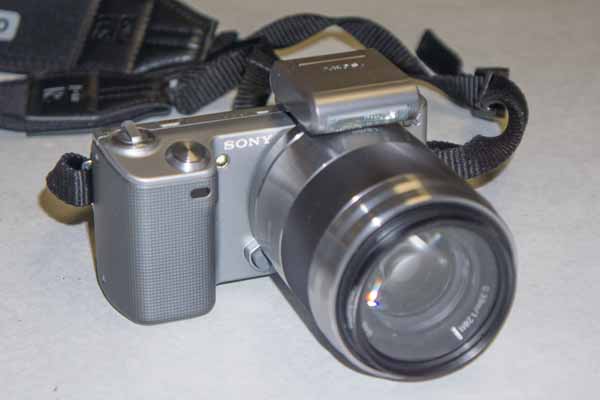
Not long ago, I acquired a mirrorless interchangeable lens camera (MILC) – the Sony NEX5. I’ve found its small size to be very convenient and its light weight easy on my shoulder. But more importantly its picture-taking capabilities and quality of the photos rival those of the other cameras in my equipment inventory.

Having interchangeable lenses is a necessity for most serious photographers. So for many years SLRs and more recently DSLRs fit this bill. On the other hand, a MILC is designed as a compact alternative to a DSLR camera. Their small size is what attracted me to the Sony NEX series.

While on vacation for two weeks I used the NEX5. It proved to be a solid performer producing good exposures under a very wide variety of lighting conditions. This model has a 14mp APS-C size sensor, the same size used in many DSLRs and I found it gave me excellent quality images.

MILCs are quiet since they lack moving mirrors. The camera’s controls were straight-forward and easy to use. I took advantage of several unique features not found in others such as sweep panorama (in-camera stitching of photos to make a wide panoramic view) and anti-blur (burst of several shots to increase likelihood of non-blurred image) modes and am more than satisifed with the results.


The Sony NEX5

Overall, I am pleased with the addition of the NEX5 to my arsenal of photo equipment. However it lacks two features that one would normally require for professional use:

  • Viewfinder – the NEX5 lacks a viewfinder. Relying the LCD for composing is not only slower, but is often difficult in bright sun.
  • Flash – the NEX5 has a small, built-in flash. However it lacks a flash shoe, making it difficult to use a standard strobe.

Continue reading

Posted in equipment | Tagged , , , | Comments Off on Delivering Higher Performance

Can we change your Point Of View?

Everyone has a point of view

But hold on!

For this discussion, I’m not talking about your opinion. Rather, I’m referring to your visual point of view.

Your view of the real world is determined by the physical specs of your eyes. When standing, the average person’s eyes sit between 5 and 6 feet off of the ground. Looking straight ahead, the eyes can take in about 45-degrees of a scene. Historically, the “normal” lens on a camera was designed to duplicate this angle – thus a 50mm lens on a 35mm camera has this same view.

In today’s photo-frenzied world, we’re taking hundreds of million of photos daily. And aren’t most of these photos taken from the average person’s viewpoint? Probably.

My contention is that changing your point of view slightly results in more interesting (and less boring, me-too) pictures.

How do you do this?

Zoom
If your camera has a zoom lens – change the zoom factor. Zoom in to get a closer (and more shallow) view of your subject. Zoom out to include a smaller view of your subject. If you’re having a hard time picking out a face that’s far too tiny to see, zooming in can help it magically reappear in your photo. The plate of appetizers below has better appeal up close than at a distance. Unfortunately, some of our commonly used picture-taking devices lack a zoom feature. For example, the popular iPhone 4S has a fixed lens of about 35mm (equivalent on a 35mm camera) so you’ll have to resort to one of the other methods.

Dance a Little
Another way to zoom in is to move closer to your subject. Conversely, zoom out by moving farther away from your subject. This sounds almost silly until you realize that not very many picture-takers use this method. It’s almost as if their feet are cemented to the earth. Dancing with your camera can actually produce interesting views when compared to the immovable object school of photograph. You’ll notice that I danced a little to get closer to the green soles on the young boy’s feet.

Do the Slide
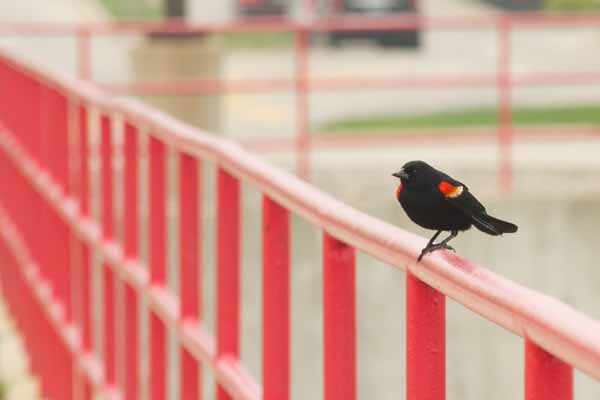
If you see a light post coming out of Betty’s head, move yourself to the right. If you want to see the gentleman’s cellphone instead of the back of his shirt, slide to the left. It’s perfectly reasonable to change the direction from which you snap your photograph. You’ll most likely end up choosing a direction which others don’t often see such as moving closer to the fence to capture the blackbird.

Get a Pair of Stilts
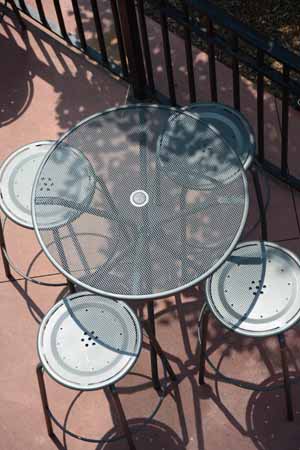
Another way to achieve photos with impact is to shoot down on your subjects. Standing on a stable chair can add two feet to your eye level. Or a set of nearby stairs can also give you a needed boost such as the overhead shot of the table and chairs. Whatever method you use to get up there will make your pictures stand out from the norm.

Things are Looking Up
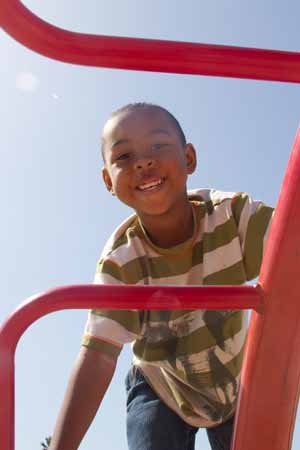
It’s a bird, it’s a plane, it’s … You get the idea. Thankfully, our heads are hinged and move upward and downward. Taking a photo of a kid climbing on the monkey bars and seeing his face up close from beneath is very different from the usual playground photo taken from 20 feet away.

Do Deep Knee Bends
If most of your pictures look like they’ve been taken from 5 to 6 feet off of the ground, you may need to do more calisthenics. Lowering your body slightly by bending or kneeling can produce a dramatic effect in your photos. Instead of capturing the top of the young girl’s hair, I was in the right position to photograph her face.

Down and Dirty
If you have the strength and fortitude, you can shoot by laying flat on your stomach and crawling around. I often use this technique to photograph flowers and the like. This changes my normal perspective to that of a bug and usually results in some interesting shots. However, it usually takes me a bit longer to get myself upright afterwards.


Enough talk. The following are a few photographs that I’ve taken using one one of more of these suggestions.


My last suggestion, is one that you’ve already seen in some of the above photos and that is to:
 
 
Mix It Up
Use the above suggestions in combination with one another. For example, zooming out and bending at the knees gives you a wider angle and lower view of your subject. Hopefully, the physical requirements to do this won’t impair your health.

In photography, it’s fine to take a different point of view and go against the masses. Sometimes, it’s like that in life too.

Written by: Arnie Lee


Posted in composition, informational, tips | Tagged , , | 1 Comment

Experiencing the Environment

and keeping the environment “a thing of importance”

Our family has been enjoying the outdoors for many years. Some of our adult children were mere babies when we trekked long distance to experience and camp in far away places like Mono Lake, Yellowstone and Acadia. We were attracted by tight knit forests, tumbling waterfalls, golden meadows, majestic mountains, winding hiking trails, abundant wildlife, trickling streams and shimmering nighttime skies.

The love of nature has been in my blood from childhood. At the University of Michigan I studied natural resource economics. The year was 1970 and the call for ecology had gone out with the first Earth Day and notable proponents such as author Rachel Carson, politician Senator Gaylord Nelson, futurist Buckminster Fuller, economist E.F. Schumacher. With my studies, I was counting on a future career that would revolve around conservation and ecology. But as often happens, this career plan didn’t come to pass. Nonetheless, I’ve been trying to keep nature and the environment close to my heart all the years since.

Wouldn’t you guess that photography has been one of my hobbies also since childhood? So it’s only natural that I would arm myself with a camera as our family traveled far and wide. And while family snapshots comprise an important part of my picture taking activities, the other part are the photos that I take to record the many amazing places that we visit.

These are all “peopleless” photographs. They’re meant to illustrate the beauty, scale, magnificence and sometimes fragility of some of our nation’s most iconic vistas and scenery.

Here are some of those picturesque places that we’ve experienced in our travels.


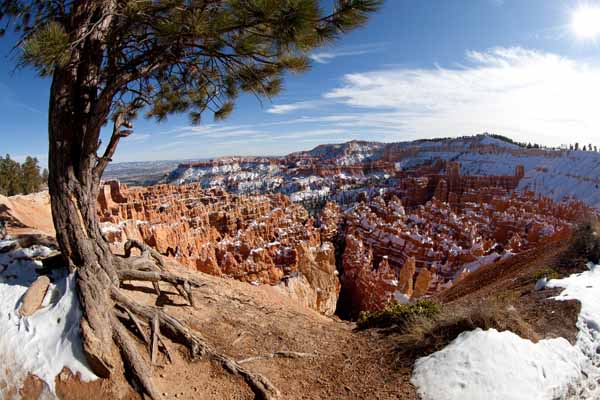
Sunset Point, Bryce Canyon NP

Temple of Sinawara, Zion NP
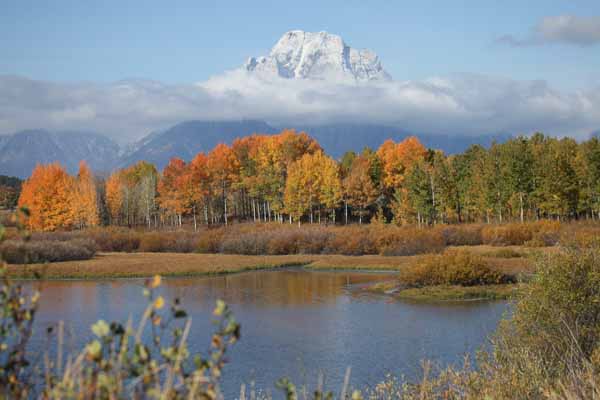
Oxbow Bend, Grand Teton NP
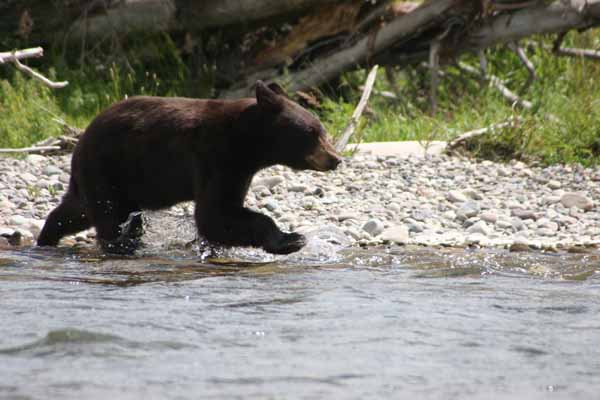
Snake River, Grand Teton NP
Zabriskie Point, Death Valley NP
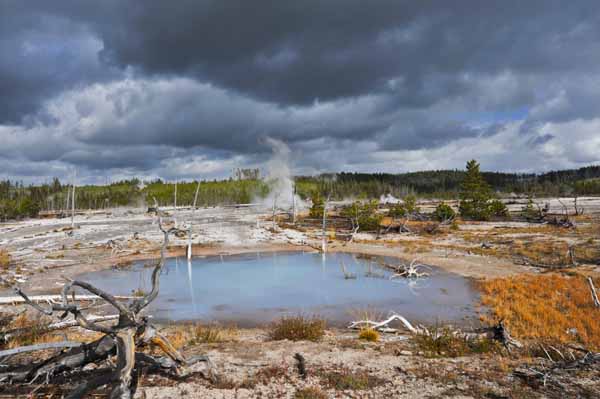
Norris Geyser Basin, Yellowstone NP

Joshua Tree NM

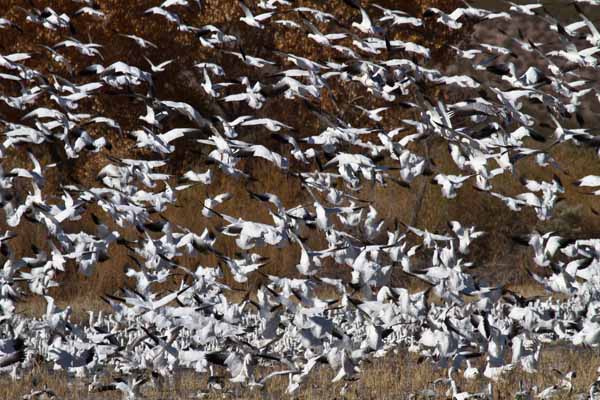
snow geese flyout, Bosque del Apache NWR

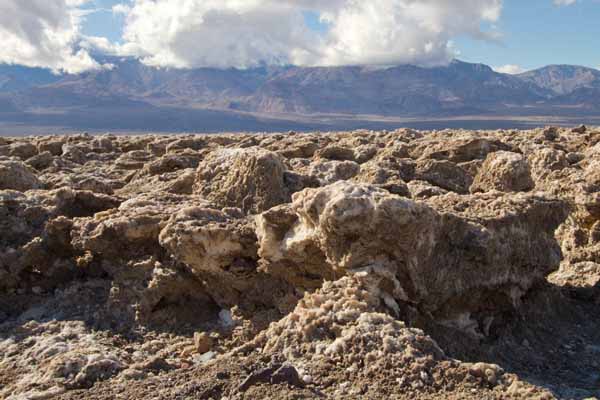
Devil’s Golf Course, Death Valley NP

West Thumb, Yellowstone NP

Lake, Yellowstone NP

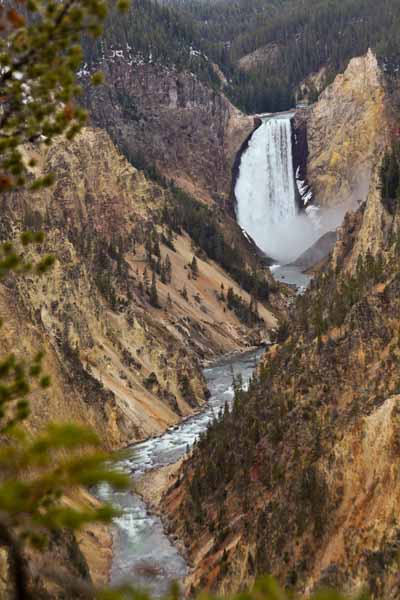
Upper Yellowstone Falls, Yellowstone NP

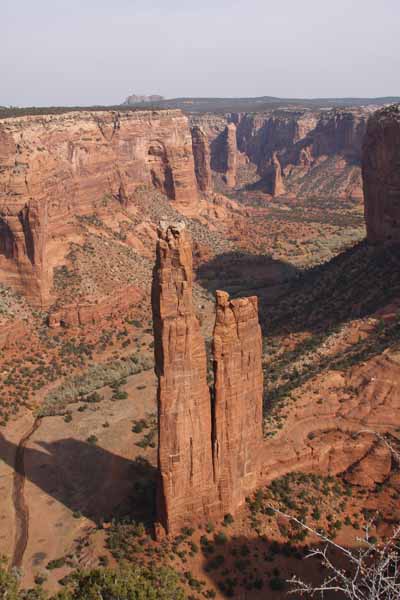
Spider Rocks, Canyon de Chelly NM

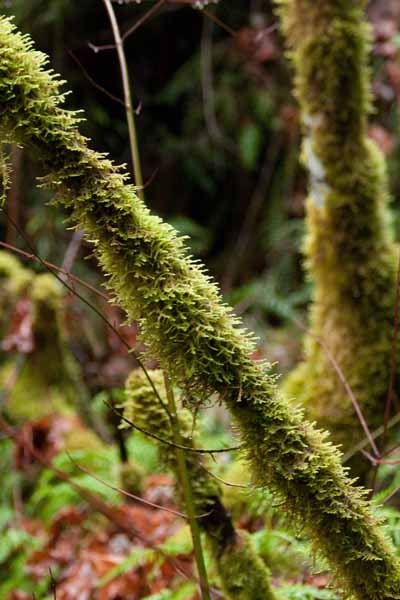
Olympic NP

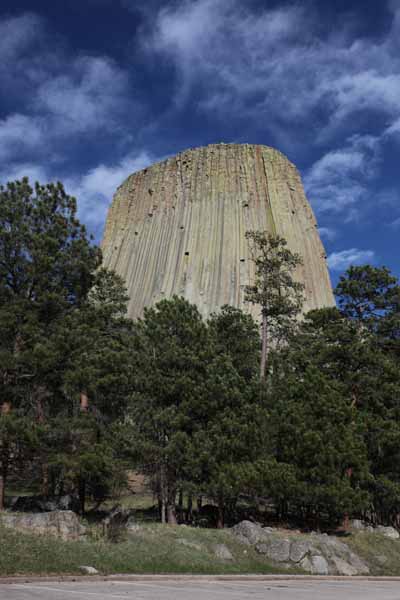
Devil’s Tower NM


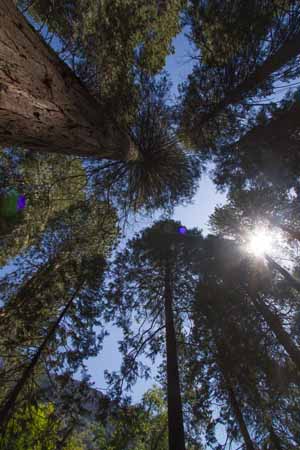
As I view this photo, I can feel the mist rising from the roaring waterfall. When I look at that photo, I find myself breathing in the scent of an immense douglas fir forest. In a third photo, my eyes are following the billowing clouds passing over a craggy, red rock canyon. And that photo has me marveling at the way the bright, fall colors accent the distant snow-covered peaks. Yes, all of these photos serve to remind me how wondrous our environment really is.

But I haven’t completed documenting my encounters with the outdoors just yet. And so I’m determined to continue experiencing the environment in person. I somehow prefer the phrase “experiencing the environment” rather than “capturing the environment” even though I may be recording the scene with a camera.

Whether it’s a national, state, county or city park or any other natural setting, I will treat the environment with respect.

I remain committed to practicing “leave no trace photography” – disturb neither our environment nor our wildlife.

Written by Arnie Lee


Our National Parks

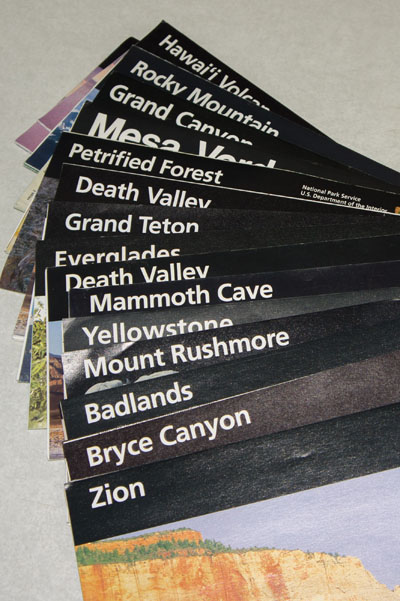
As you can see from the photos above, I’m a avid user of our National Park System. It’s extensive, consisting of almost 400 parks, monuments, landmarks, recreation areas, shorelines, trails, historic sites and wildlife refuges and encompassing some 85 million acres. Each year 275 million of us outdoor lovers visit these places.

Entrance fees vary by unit, but an $80 annual pass is a bargain if you plan to visit several parks. Senior citizens 62 years and older can purchase a lifetime pass for only $10.

Find our more about our National Parks here.


Posted in kids, landscapes, personal, scenic, travel, wildlife | Tagged , , , , , , , , , , , , , | 1 Comment